Getting Started
Your wallet address is public. Does everyone need to see your balance?
You can share a wallet address to receive crypto. That does not mean it belongs everywhere. An address, a transaction and your name can reveal connections you did not intend to share. A few simple choices help you decide what others really need to see.
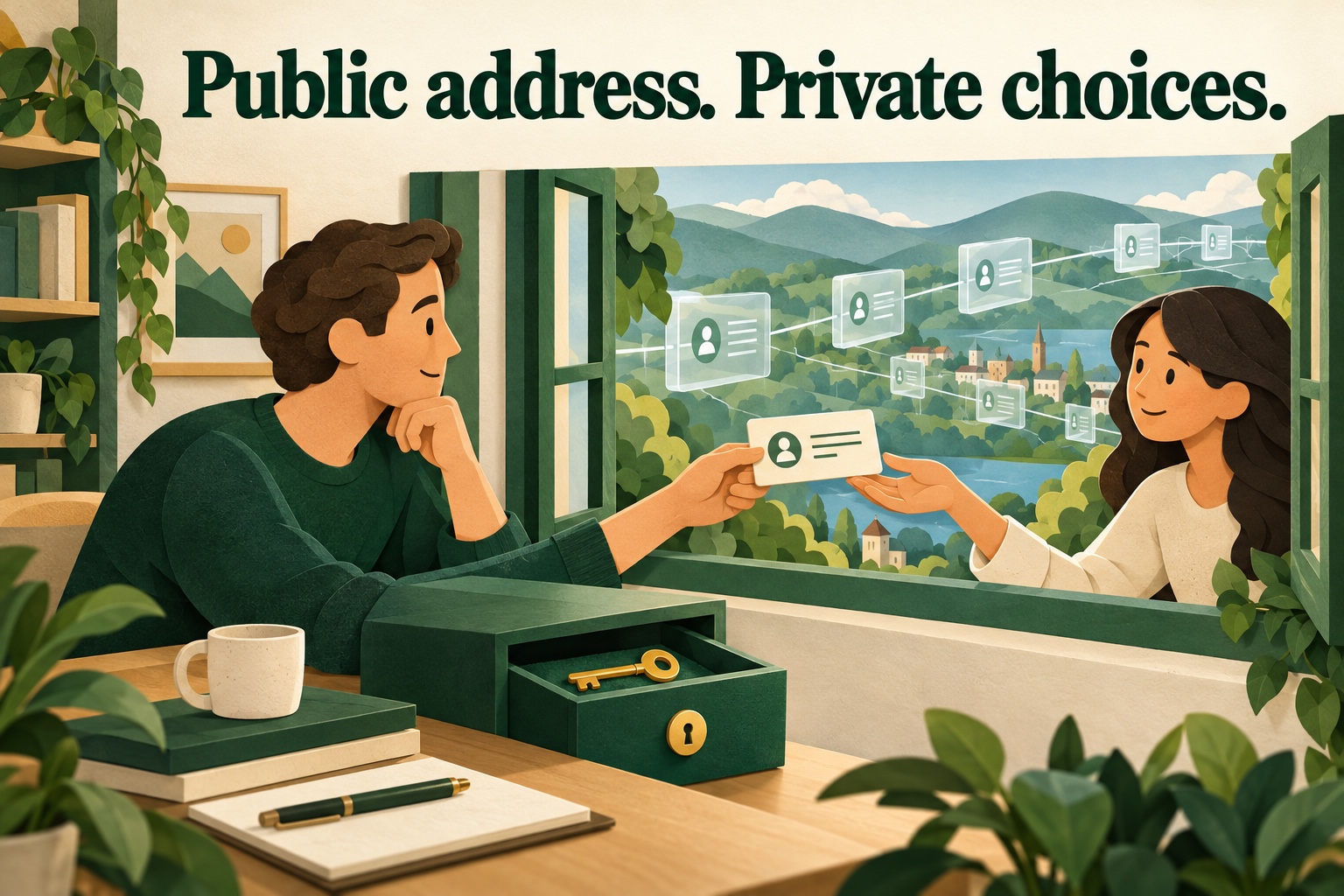
An address is not a secret key
On public networks such as Bitcoin and Ethereum, transactions and address information can be inspected. An address alone does not give someone permission to spend your crypto. Spending needs the required authorisation, such as a signature made with a private key.
Someone paying you needs the correct receiving address and the agreed asset and network. They do not need your recovery words, private key or sign-in codes. A public address is not a password, but it can still become sensitive information about you.
A name changes the picture
An address looks like a string of characters. That does not mean it will always remain separate from a person. Posting it beside your name on a public profile adds a clue yourself.
Fictional example: Noor wants to receive a payment from a customer. She sends the required receiving details directly to that customer. Later, she wants to show a large group chat that the payment worked. This is a different audience with a different reason for sharing.
Cropping out the balance is not enough
Noor removes the balance from her screenshot but leaves the address and transaction reference visible. Those details can lead someone to the public transaction. Cutting away the rest of the picture does not make the underlying record private.
She asks what the group actually needs. For her story, a fictional example without real payment details is enough. If she needs to discuss the actual payment with her customer, she uses their agreed private channel. A private conversation does not make the blockchain itself invisible, either.
A new address is not an eraser
For Bitcoin, your wallet may offer a fresh receiving address. This can reduce unnecessary reuse. Use your own wallet’s receiving function and official instructions; never invent an address or casually change networks.
A new address does not delete previous transactions or guarantee anonymity. A transfer between your own addresses can also create a visible connection. Do not expect a new string of characters to make your history disappear.
A useful check before sharing
Ask three questions: who needs this, which details are necessary, and where am I posting them? For a payment, still check the asset, network and full address. Privacy does not replace those transfer checks.
Practise without moving money: make a fictional payment receipt and identify the fields you would avoid posting in a public group. Then test your understanding with the free quizzes at three levels. Thoughtful sharing starts with a moment of attention before pressing Send.
Original sources & further reading
- Bitcoin.org — public transactions, address reuse and privacy
- Ethereum.org — accounts, addresses and private keys
Sources checked on .