Security Alert
A “new financial system” could be a scam.
Original source published:
A promise to protect your money can sound reassuring. Before you trust an unfamiliar crypto service, take a moment to understand what it wants you to hand over. A useful question is: who would control my money afterwards?
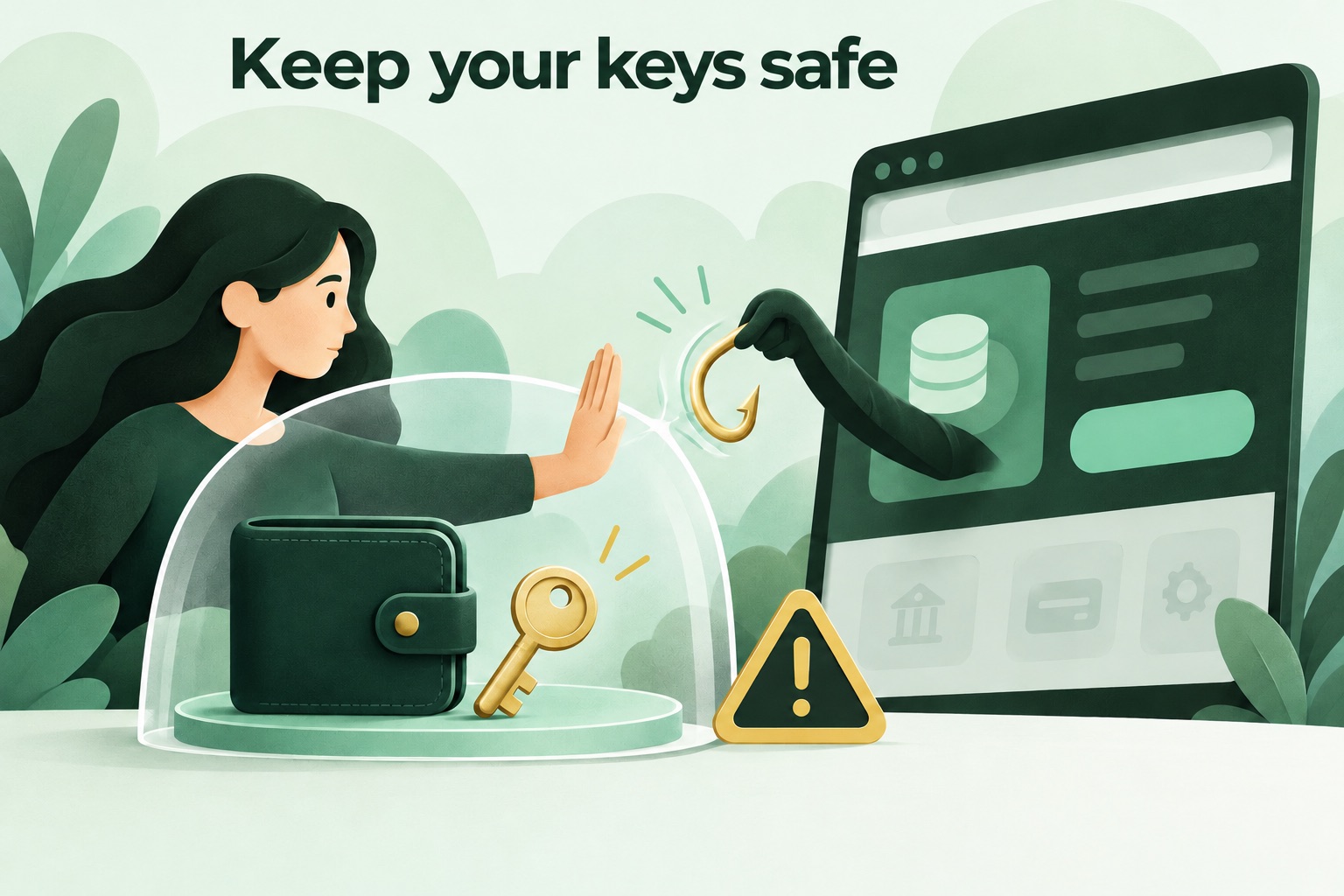
The warning behind this story
On 23 October 2026, New Zealand’s Financial Markets Authority, the financial regulator, warned about supposed alternative financial systems and crypto storage services. It described polished websites, requests for secret wallet details and demands for payments before withdrawals. The regulator said consumers had reported losses. A safer financial future is part of the pitch.
The lesson is useful wherever you live: a story about a safer future deserves the same careful checking as any other financial offer. The sections below explain the basics and offer a practical way to pause and assess a request.
A good-looking screen is only a screen
Imagine someone showing you a photograph of a locked safe. The picture cannot prove that your money is inside it. A website showing a balance has the same limitation: a number on a page does not, by itself, prove you can withdraw that money.
Design, logos and friendly conversation are easy to notice. Ownership and control are harder to see. Before acting, write down the company’s legal name, the service it claims to provide and the country where it operates. Check any claimed authorization through the regulator’s own website, reached independently. Registration alone does not guarantee that a service is safe.
Your wallet’s secrets open the door
A crypto wallet is an app or device that helps you control digital assets. Its private key is a secret used to authorize actions. A recovery phrase is a set of words that can restore access to a wallet. Think of these as the master keys to a home, rather than an ordinary customer reference.
A public wallet address is different: it is a destination for receiving assets. Learning the difference matters before you fill in a form or speak with support. Never send your recovery phrase or private key to another person, type them into a website sent by a stranger, or share a screen that reveals them.
An unexpected release fee deserves a pause
Suppose a screen says you have money waiting, but someone asks you to pay again to unlock it. Ask yourself whether you can independently verify both the original money and the new demand. Sending another payment cannot make a suspicious balance trustworthy.
Some crypto transfers have genuine network fees, paid to process a transaction. That does not validate an unexpected invoice from a person claiming to release your funds. The existence of real fees is no reason to accept every fee story. Stop before paying and seek help from an independent, trusted source.
Make a calm checking routine
Use a short pause before an unfamiliar offer: can I explain the service in my own words? Can I verify the organization without using its own links? What exactly would I send or approve? If any answer is missing, there is still work to do before making a decision.
If you think you have been targeted, stop communicating through the suspicious channel and keep messages, payment details and website addresses as evidence. Use independently found official support or reporting channels. If wallet secrets have already been exposed, consult the existing wallet emergency chapter promptly. Treat promises of guaranteed recovery with the same caution as the original offer.
Original sources & further reading
- FMA — original warning, 23 October 2026
- WelcomeToWeb3 — recovery words
- WelcomeToWeb3 — wallet emergency plan
Sources checked on .