Getting Started
Crypto is easier when you understand what you’re doing.
You don’t need to become a technology expert to understand crypto. A few useful basics can help you ask better questions, spot mistakes and feel less rushed. WelcomeToWeb3 is a free, independent place to begin.
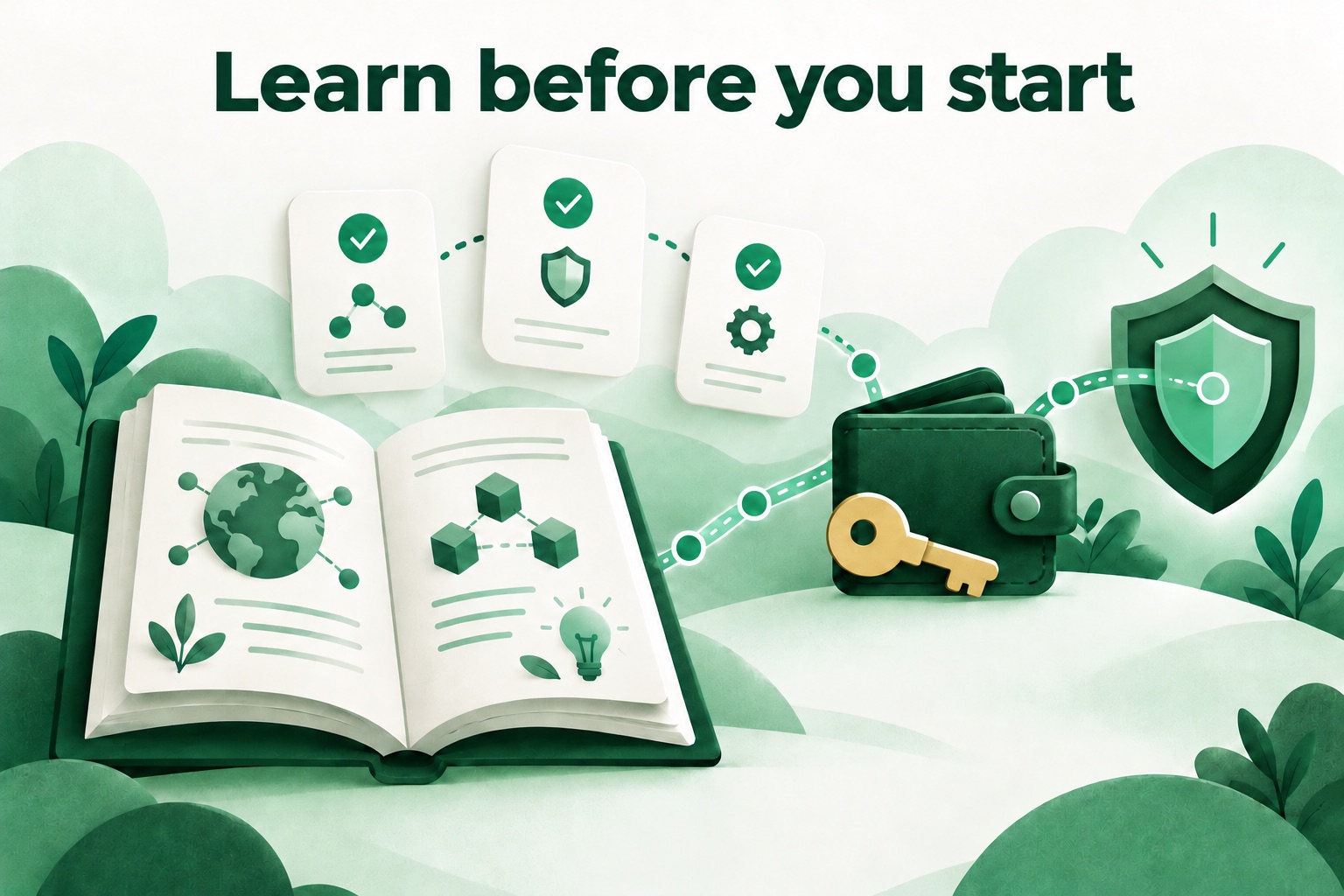
Start with understanding, at your own pace
Crypto is digital value that can move through a computer network. Web3 is a broad name for services that use these networks and digital wallets. Those words can sound complicated. The everyday questions are much simpler: where is my money, who can move it, and what am I agreeing to?
WelcomeToWeb3 explains these questions in manageable chapters. You can pause, return to a topic and practise with three interactive quizzes. There is no need to buy cryptocurrency to read the guide or test your knowledge. Learning can be the whole activity.
A wallet is more like a keyring
A crypto wallet is an app or device that helps you use digital assets. The assets are recorded on a blockchain: a shared record of transactions maintained across a network of computers. Think of the wallet as a keyring that lets you act on that record, rather than a purse with coins inside.
With a wallet you control yourself, you are responsible for protecting its keys. A private key is a secret that authorizes actions. A recovery phrase is a set of words that can restore access to a wallet. Keep both secret. Anyone who obtains them may be able to move the assets.
The destination and the route both matter
Sending crypto involves more than copying an address. An address identifies a destination, a little like an account number. The blockchain network is the route the transfer uses. The receiving service must support both the asset and that route.
Think of sending a parcel: the right street address is useful only if you have chosen a delivery service that can reach it. Before transferring anything, check the full address, the network, the asset and the fee. A small test can help check a route, but it cannot prove that a service is trustworthy. Many completed transfers cannot simply be cancelled.
Slow down before you approve
Some websites ask a wallet to approve an action. A smart contract is a program on a blockchain that follows written rules. An approval can let that program use particular assets. Connecting a wallet and giving permission to spend are different actions; read what each request allows.
You do not have to understand the program’s code to ask useful questions. What am I allowing? How much could it use? Do I recognize the service? If the answer is unclear, stop and look it up. A countdown, friendly message or polished website is no reason to skip these checks.
Use the guide, then test what stayed with you
Begin with the existing educational guide. It covers wallets, recovery words, networks, transfers and common warning signs. You can follow the chapters in order or revisit the subject that feels least familiar.
Then try the quizzes: Level 1 checks the foundations, Level 2 explores practical decisions, and Level 3 looks more closely at risks. A wrong answer is a useful signpost to a chapter worth reading again. You can learn at your own pace without treating a score as a guarantee of safety.