Real-World Adoption
Crypto cards, part 1: why use one?
A crypto card can connect money you already hold in crypto to an ordinary purchase. But what problem does it solve, and how do the cards differ? We start with the first four names in CoinGecko’s overview: Nexo, COCA, Bitget Wallet Card and Brighty.
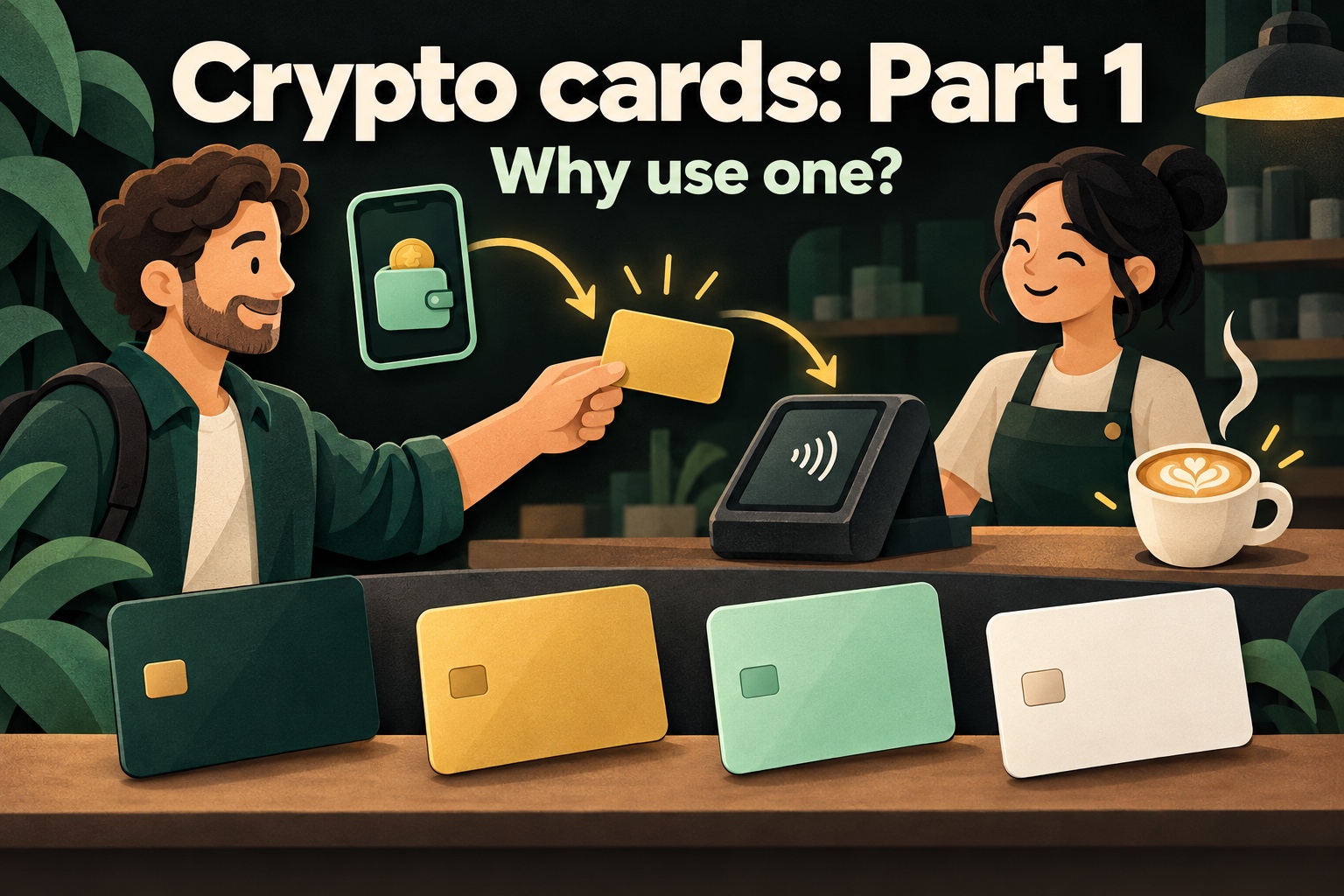
Why would you use a crypto card?
Imagine a freelancer who receives part of a payment in stablecoins: tokens designed to follow a currency such as the dollar. They want to spend a small amount on groceries. A supported crypto card can provide a route from that balance to a normal card payment, without arranging a separate bank transfer for each purchase.
The shop generally receives ordinary money through the card system. It does not need to accept your particular token. For someone who already holds suitable assets, that can be convenient for everyday spending or online purchases. It does not make the purchase free, guarantee acceptance everywhere or remove the risks of the balance being used.
First understand where the payment comes from
Some cards use a balance you load beforehand. Others convert supported assets when you pay. A borrowing option is different: your crypto supports a loan, and the purchase creates debt. A card that pays crypto rewards may also work differently from a card that spends crypto. Read the payment method, not just the word “crypto”.
You do not need to buy crypto just to buy a coffee. If your existing bank card already does the job more simply and cheaply, that remains a useful comparison. Start with the problem you want to solve: spending an existing balance, paying online or managing a modest travel budget.
1. Nexo: spending or borrowing
Nexo offers Debit Mode for spending available assets and Credit Mode for borrowing against crypto. The selected mode changes what a purchase means. Borrowing introduces interest and collateral risk; it is not simply another name for spending your own balance.
The useful question is: will this purchase reduce my assets or increase what I owe? Check the mode before paying, along with conversion costs and the conditions applicable to your country.
2. COCA: a wallet with a payment card
COCA combines a wallet with card payments and describes its wallet as non-custodial: the user controls the wallet keys. Its card documentation explains that crypto is converted into ordinary currency for a purchase. Card services still involve payment partners.
That can appeal to someone who values wallet control. But control also brings responsibility for access and recovery. Check the supported assets, card funding process and local terms; a wallet being available does not automatically make every card feature available.
3. Bitget Wallet Card: load a spending balance
Bitget Wallet Card lets eligible users apply through the wallet, verify their identity and fund a card using supported assets. Issuing partners and the available card versions differ by region. It is worth checking the Wallet Card documentation specifically, rather than assuming every Bitget-branded card is identical.
Look at the net cost of loading and spending. A reward that offsets certain fees is conditional; it is not the same as a promise that every payment is free.
4. Brighty: crypto and ordinary currencies in one app
Brighty combines currency accounts and crypto balances with payment cards. Its documentation describes linking a card to an account in the app, allowing spending from a selected ordinary-currency or supported crypto balance.
For someone switching between balances, that may be practical. Check which account is selected, how conversion works and what your plan costs. A subscription, a currency-conversion fee and a cash-withdrawal charge are separate things. Do not compare only the price of the card itself.
Choose the use first, then the card
Before applying, write down your country of residence, the asset you want to spend and the currency of your purchases. Check eligibility, total costs, limits and how to freeze the card. Keep a small spending budget separate from funds you cannot afford to lose access to.
CoinGecko supplies the starting list; several entries are sponsored. Here, the order is a reading order, not a verdict about the best card. Provider details can change. Part 2, planned for 3 November, covers the remaining six. The free quizzes below help you practise the basics before taking a next step.
Original sources & further reading
- CoinGecko — starting list and sponsored disclosures
- Nexo — card modes and eligibility
- Nexo — spending without selling and borrowing
- COCA — wallet and card
- COCA — wallet documentation
- Bitget Wallet — card and regional conditions
- Brighty — accounts and cards
- Brighty — how crypto debit cards work
Sources checked on .