Security Alert
Wallet support: check who is helping you
Something seems wrong with your wallet. You ask a question, and someone immediately offers help. That quick answer can feel reassuring. Before following instructions, check who is answering and how you reached them. Good help starts with a route you can verify, while your wallet secrets stay private.
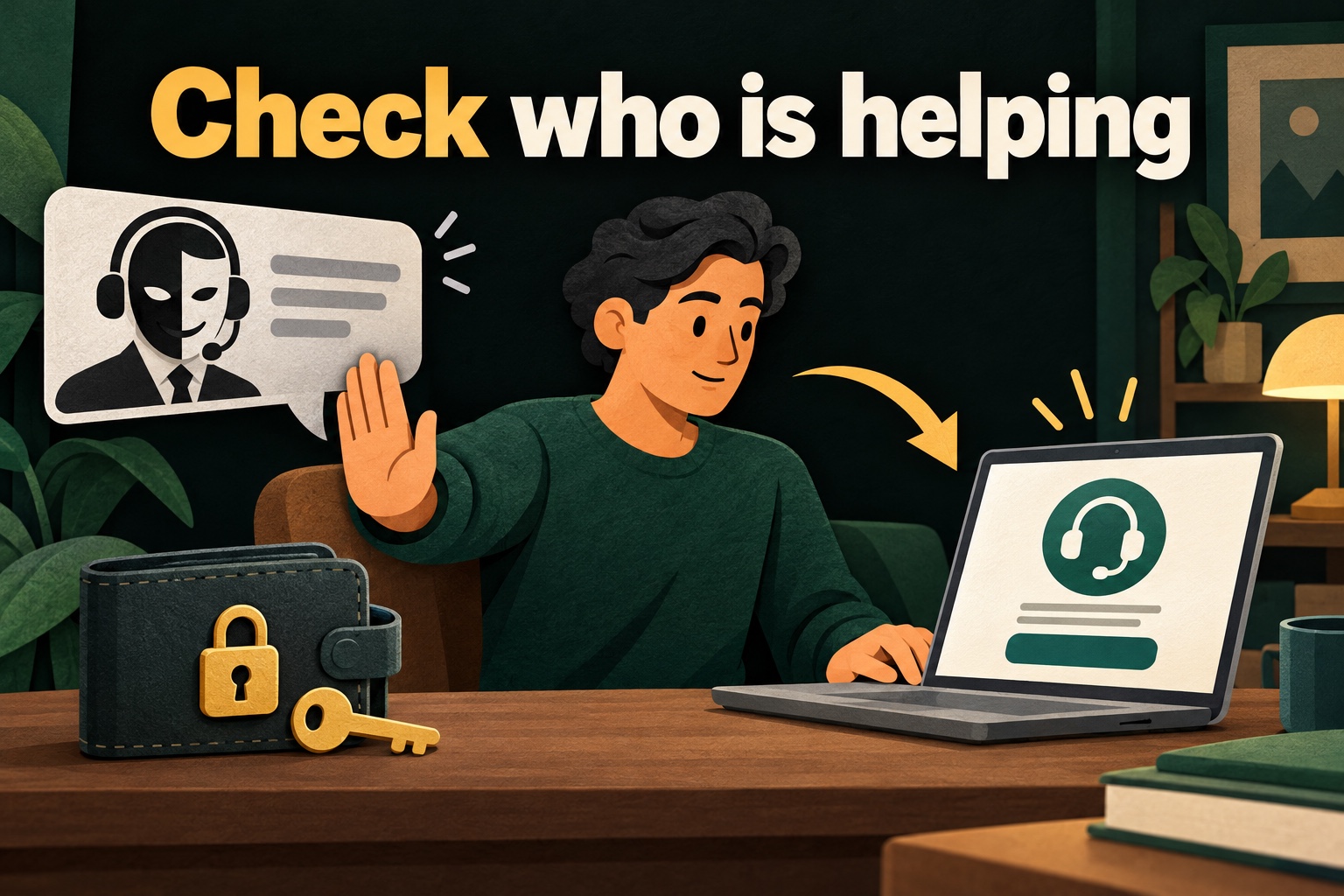
A familiar face is not proof
A logo, an employee photo and a confident explanation can be copied. An account replying to your public question does not automatically belong to the wallet company. MetaMask describes impersonators who watch for support requests and approach people with a convincing identity. The useful question is not whether the profile looks professional, but whether you independently reached a recognised support channel.
Separate the problem from the person offering to solve it. A delayed transaction may be real while the proposed helper is fake. Knowing what you posted publicly does not give that person special access to your case. You can acknowledge that something needs checking without accepting the first suggested solution.
Open the support route yourself
Close the unexpected conversation and use the help section inside the genuine wallet, or a provider website you have independently verified. Check the full website address. Avoid using a phone number or link supplied by the person you are trying to verify. The FTC also warns that fake support can appear in search results and advertisements.
Each provider has its own support process. For example, MetaMask directs users to its help centre and says it does not provide telephone support or discuss individual cases through unsolicited social messages. Read your own provider’s current instructions. An open ticket can produce a legitimate follow-up; verify it through the original channel instead of trusting a display name.
A fictional example: Sam waits for a transfer
Imagine Sam asking in a public group why a transfer is taking time. A stranger replies within a minute, copies the wallet logo and offers to “synchronise” the account. They send a form requesting the recovery phrase. This is a fictional example. Sam has not proved the transfer failed, and the stranger has not proved any authority to repair it.
Sam closes the form without entering anything. From the wallet’s own help menu, Sam finds instructions for checking the transaction status. The lesson is the order of actions: first verify the route to help, then investigate the problem. The fast reply and the useful-sounding technical word did not make the form trustworthy.
Keep the difference between information and control clear
A recovery phrase or private key can give control of a wallet. Do not send it to a helper, type it into their form or show it while sharing a screen. MetaMask distinguishes entering a recovery phrase inside the genuine wallet during a deliberate restoration from giving it to a website or support agent. Those are different situations.
A public transaction reference may help explain a transfer, but sharing it can connect your identity to activity. Give only the relevant information through a verified channel. Never approve a transaction you do not understand just because someone calls it verification. Treat requests to install remote-control software as a separate, serious access decision, not a routine part of a chat.
If you already followed instructions
Stop the conversation and avoid sending more money or information. Record what happened without publishing secrets. The next steps depend on whether you only opened a page, revealed a password, disclosed a recovery phrase, signed something or granted device access. These are not interchangeable problems. Use the provider’s official security guidance and trusted technical help for the situation you actually have.
Be wary of a second stranger promising guaranteed recovery for an advance payment. The FTC describes scams that target people who have already lost money. Reporting an incident and getting genuine help can be useful, but nobody’s confident promise proves that funds can be returned. Do not turn an urgent first problem into another unverified payment.
Practise the route before you need it
Find the official help menu while everything is calm. You do not need to buy crypto, share a balance or open a real support case to practise finding it. Write down three questions: did I choose this contact route myself, what information is being requested, and would the proposed action give someone control? If an answer is unclear, pause.
Try the free quizzes below to check the difference between a public reference, a wallet secret and an approval. The habit you are practising is simple: investigate the issue through a channel you chose independently.
Original sources & further reading
- MetaMask — spoofing and impersonation
- MetaMask — official support channels
- MetaMask — verify the real wallet and protect the recovery phrase
- FTC — recognise tech support scams
- FTC — refund and recovery scams
Sources checked on .