Getting Started
What keeps a stablecoin stable?
A stablecoin aims to follow a reference value, often one US dollar. That can make amounts easier to understand than a constantly moving crypto price. But the word stable describes a goal. To understand the token, look at its backing, the route back to money and the currency you actually spend.
Start with the currency it follows
A token aiming for one dollar does not aim for one euro. Before comparing balances, identify its reference currency. Also check the exact asset and network: a familiar ticker or dollar symbol alone does not identify what you are holding. Two tokens can target the same currency and still have different issuers, rules and risks.
This matters when an app shows a reassuring round number. Ask what that number measures: a token balance, a dollar estimate or the amount you could receive after selling. Those figures answer different questions. A wallet display is not a promise that your eventual payment will equal its current estimate.
Look behind the token
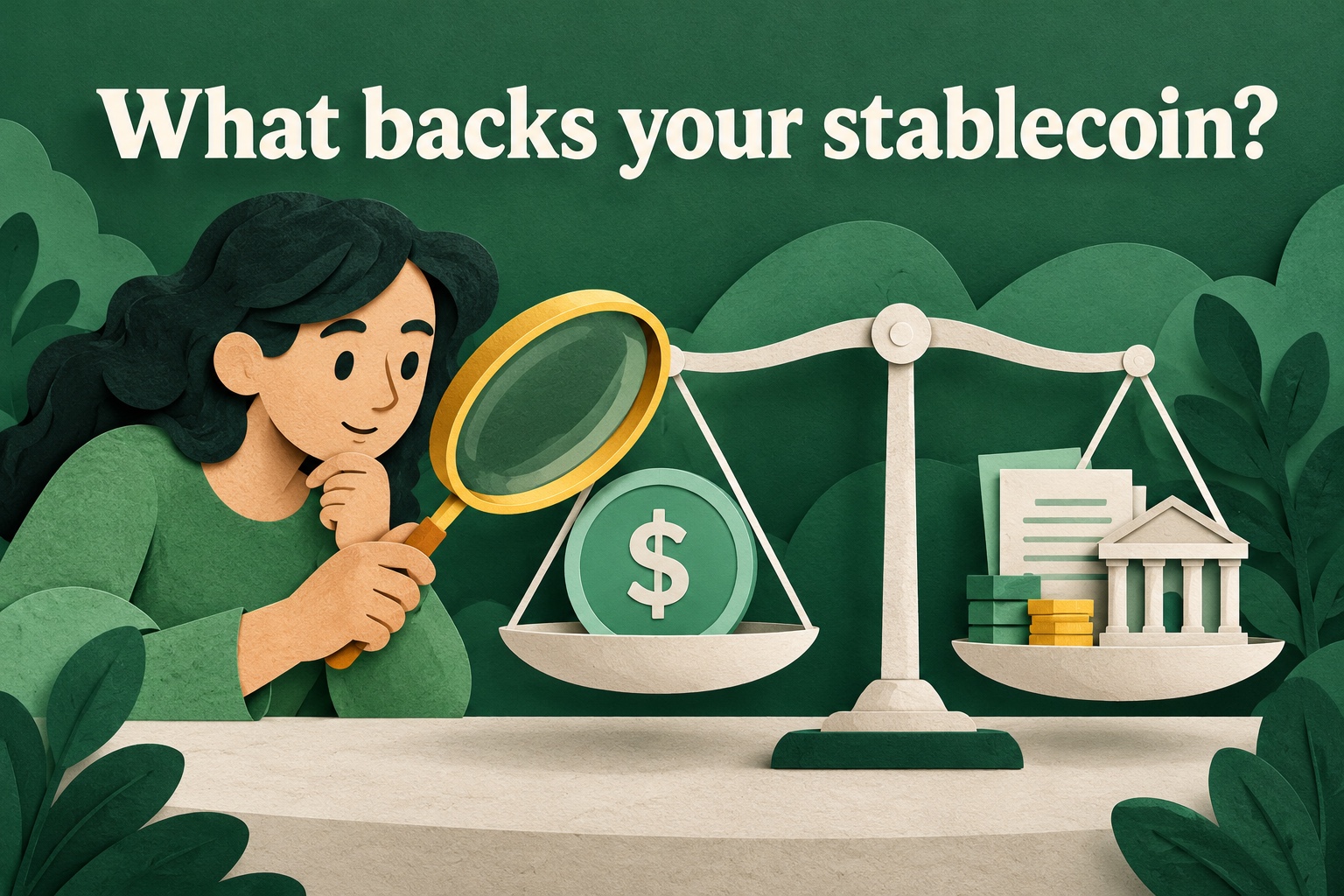
Some stablecoins use reserves such as cash and short-term government debt. Others use crypto collateral, which can change in value, or mechanisms that try to balance supply and demand. These approaches do not offer identical protection. A name, colour or popular logo cannot tell you which design applies.
For example, Circle publishes information about the reserves behind USDC and regular independent assurance reports. That is a useful source to inspect, not a recommendation to choose that token. Read what a report covers and its date. Evidence about reserves at a particular time does not guarantee every future withdrawal or market price.
Selling and redeeming are different routes
Selling a token through an exchange means accepting an available market price, subject to that service’s conditions. Redeeming it with an issuer means using the issuer’s conversion process. Do not assume that every holder can use every route, immediately and without cost. Eligibility, verification, jurisdiction and product terms matter.
Before relying on a payment route, describe it in ordinary words: where is the token now, who would convert it and what money would arrive? Then check fees, limits and supported networks. If you cannot explain the route, pause before transferring. The token’s target price alone cannot answer these practical questions.
What does losing the peg mean?
The peg is the value the stablecoin tries to follow. If a dollar-linked token trades below or above one dollar, its market price has moved away from that target. Confidence in reserves and redemption matters; when confidence weakens, demand to exit can create pressure. A reserve claim and a market quote are different kinds of information.
A temporary deviation is not automatically proof that everything is lost, and a familiar price returning is not proof that every underlying problem is solved. Avoid drawing either conclusion from one screenshot. Look for the issuer’s explanation and independent primary information before deciding what the change means.
A dollar can stay a dollar while its euro value changes
Here is a fictional example, with invented exchange rates and no fees. Alex holds 100 tokens, each still worth one US dollar. At €0.90 per dollar, their value is €90. Later, at €0.85 per dollar, the same dollar amount is worth €85. In this example the peg never changed; the currency conversion did.
If Alex pays for something priced in euros, both the conversion rate and any charges affect the result. This is why stable against a reference currency does not mean stable against every household expense. Always compare the currency you hold with the currency of the bill you intend to pay.
Four questions before you rely on it
What value is the token trying to follow? What supports that goal? How could you turn it into the currency you need, under the rules that apply to you? Are you using the exact asset and supported network? Write down the answers without copying marketing phrases. An unanswered question is useful: it shows what to investigate next.
You do not need to buy a token to practise this check. Use the fictional example, read the original explanations below and test your understanding in the free quizzes. Learning the mechanism comes before choosing a product; no stablecoin is a universal answer to every payment need.
Original sources & further reading
- Circle — reserve transparency
- Circle — USDC terms and regional conditions
- European Central Bank — stablecoin risks and redemption confidence
- Reserve Bank of Australia — stablecoin designs and risks
Sources checked on .