Crypto Update
MAJORITY adds USDC transfers: what reaches the recipient?
Original source published:
A new MAJORITY and zerohash announcement puts stablecoins inside a familiar task: sending money to family. The useful question is what arrives, and how the recipient can use it.
The confirmed announcement
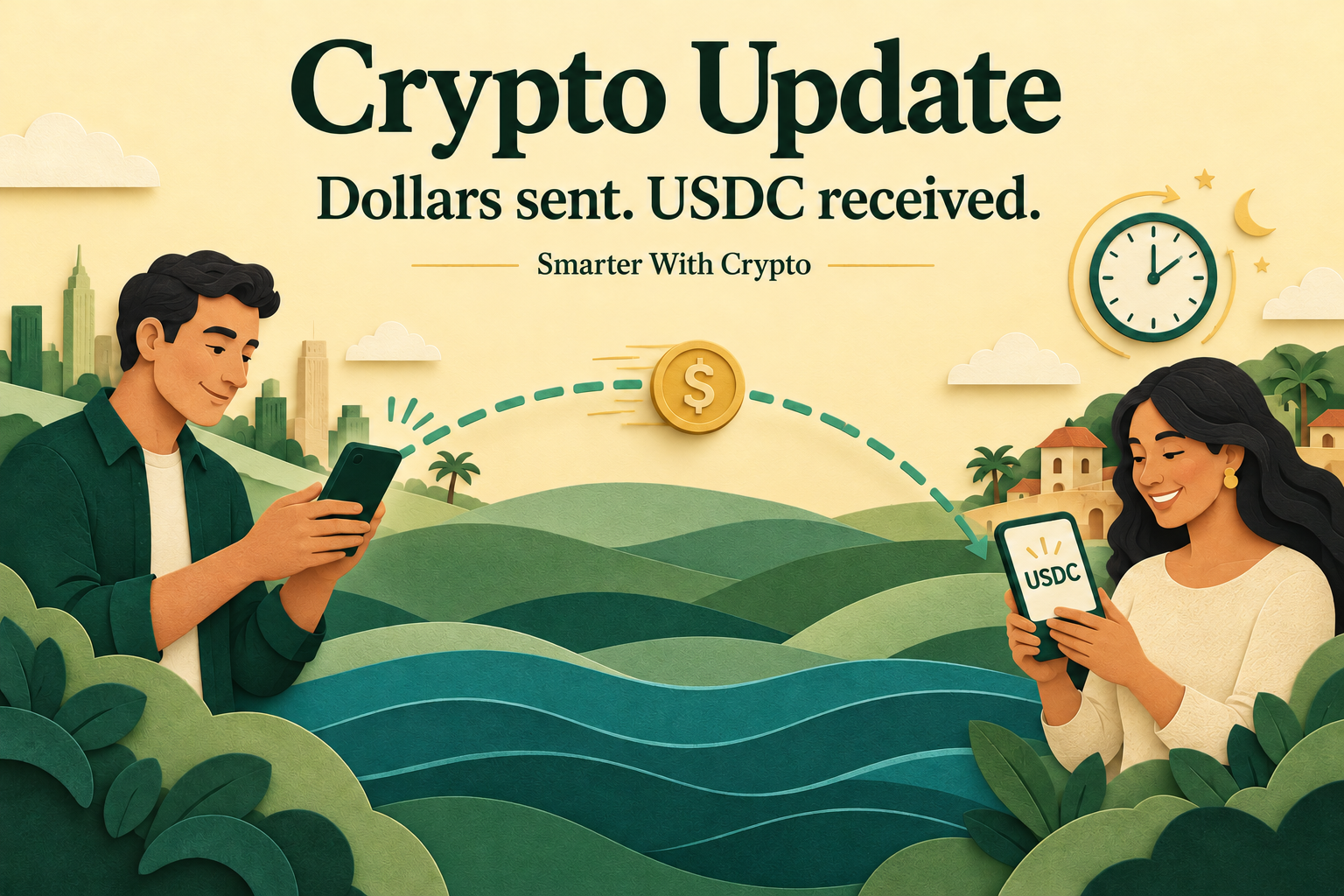
On 26 October 2026 at 09:00 New York time, zerohash announced a live integration for eligible MAJORITY members in the United States sending to members in Latin America. The sender pays US dollars; the recipient receives USDC in a MAJORITY Global Wallet. zerohash handles conversion and delivery, while MAJORITY provides the app.
The release describes availability around the clock, including holidays. It also says availability depends on location and eligibility, and describes the Global Wallet as self-custodial. This is a specific integration announcement, rather than evidence that every country or every MAJORITY customer has access. The release does not give the exact hour the service became operational.
Our explanation: a token is a step in the journey
USDC is a digital token issued by Circle with a US-dollar value target. Circle describes reserves and redemption arrangements intended to support that target. Receiving USDC is therefore different from receiving local currency in a bank account. Think of the transfer as a journey with several stages: paying, moving value, receiving a token and, where needed, converting or spending it.
That distinction matters even when an app makes the first steps look simple. A recipient who needs local money still needs a usable route from the token to that money. Before choosing a transfer method, compare the amount the recipient can actually use after conversion and any applicable charges.
A fictional family example
Imagine Elena sending money to her brother Marco. These people and this scenario are fictional. Elena sees a dollar amount in her app; Marco needs local currency for an everyday bill. A USDC balance appearing in his wallet answers one question: what did he receive? It does not answer how much local money he can obtain or when he can use it.
They would first check whether both accounts qualify, how Marco accesses and recovers his wallet, which conversion options are available, and what the final quote shows. No amount, fee or delivery time in this example is a claim about MAJORITY's service.
Around-the-clock transfers still have limits
Our reading of the news is that stablecoin infrastructure is becoming part of ordinary payment apps. Around-the-clock transfer availability does not establish that every cash-out method works around the clock, or that the complete journey is always instant or cheaper. The announcement alone is not enough to compare total costs for every destination.
A dollar target also does not remove risk. Circle's disclosures describe possible market-price differences and operational delays. They state that USDC does not carry deposit insurance. Someone budgeting in another currency must also consider the exchange rate from dollars into that currency.
The practical question to keep asking
Start at the receiving end: what exactly arrives, who controls access, and what must happen before the money is useful? Then read the eligibility, recovery instructions and final conversion quote. That habit helps you evaluate this announcement and future payment products without needing to buy crypto just to understand them.
Original sources & further reading
- zerohash's original timed announcement, 26 October 2026, 09:00 ET
- The same announcement on zerohash's official newsroom
- Circle: USDC reserves and transparency
- Circle: USDC risk factors and redemption conditions
Sources checked on .