Getting Started
Keep your recovery phrase offline
A wallet password can feel like the main secret. For a wallet you recover with a phrase, those backup words deserve special care. Understand what they control before deciding where to keep them.
First check which recovery method you use
This guide concerns a recovery phrase that your wallet asks you to record and protect yourself. Some wallet setups use different recovery arrangements, including account-based access with encrypted recovery components. Follow the official instructions for your actual setup; do not assume every wallet works the same way.
A recovery phrase is an ordered set of words used to restore access to the accounts derived from it. It is not your public receiving address. Someone who obtains it may be able to restore control elsewhere. Your normal app password does not turn those words into harmless information.
Offline means more than hiding a file
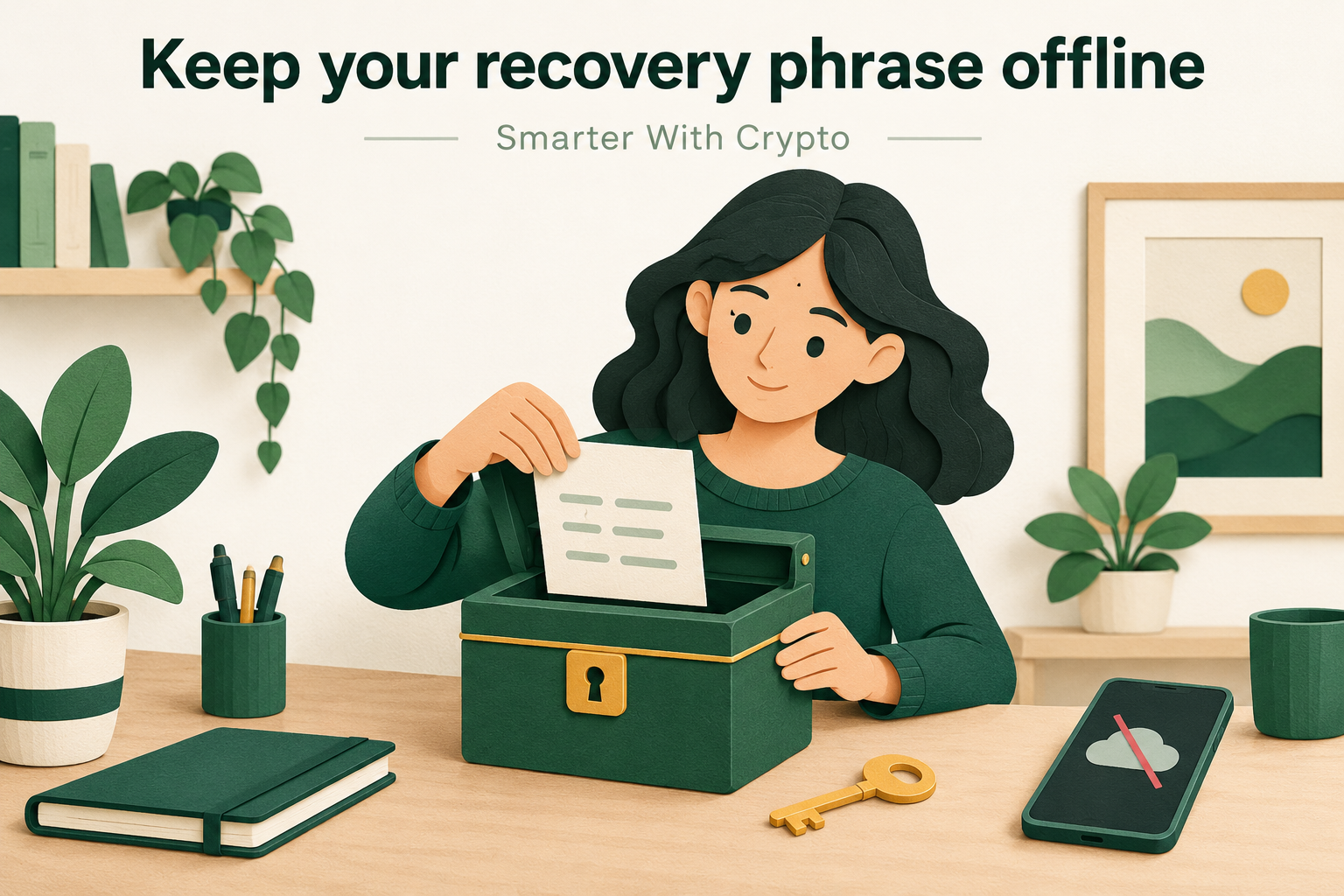
For a phrase you manage yourself, MetaMask recommends a carefully recorded physical copy and warns against cloud documents or emails. Trezor likewise advises keeping wallet backups offline, private and protected from theft and damage. A screenshot, phone photo or synced note creates another digital copy, even when it is tucked inside an obscure folder.
That is different from a wallet's specifically designed recovery service. Do not improvise your own online backup by sending the raw words to yourself. Also avoid reading them aloud near recording devices or displaying them during a screen share. This article contains no sample recovery phrase, and you should never send your real words to us.
A physical copy still needs protection
Record every word accurately and in the original order, away from cameras and other people. Choose storage that fits the risks in your circumstances: unauthorized access, loss, fire or water. A visible note beside the computer is easy to find. Keeping the only backup beside the device can expose both to the same incident.
More copies create more places to protect; fewer copies can leave fewer recovery options after damage. There is no universal hiding place. Think through who can access the backup and how you will find and read it when needed. Follow your provider's backup and storage guidance rather than inventing a secret word order.
A fictional example: Noor replaces her phone
Noor is a fictional beginner. Her phone stops working, but she has a legible offline backup stored separately. Before relying on it, she had checked which accounts it covers and how her wallet's official recovery process works. She has not photographed the paper or shared its contents.
A stranger now offers to fix everything through a recovery link. Noor pauses and finds the provider's official instructions independently. The point of the example is the preparation and the source of the instructions. It is not a claim that every backup restores every account, asset or wallet application.
Recovery is different from a support request
A legitimate recovery process may ask you to use your phrase in the verified wallet application or through the specific device procedure you initiated. That does not make a form sent by a stranger legitimate. MetaMask and Trezor state that their support teams will not ask you to share these words.
Look for an official backup-check procedure before an emergency, and follow its instructions exactly. If you suspect the phrase has been exposed, use the provider's official security guidance. Deleting a message or changing an app password does not establish that someone else's copy has disappeared. Do not publish the phrase while asking for help.
Original sources & further reading
- MetaMask: securing your recovery phrase and password, including different setup methods
- MetaMask: what a recovery phrase covers and why it must stay private
- Trezor: using a wallet backup
- Trezor: physical storage, recording devices and keeping backups safe
Sources checked on .