Real-World Adoption
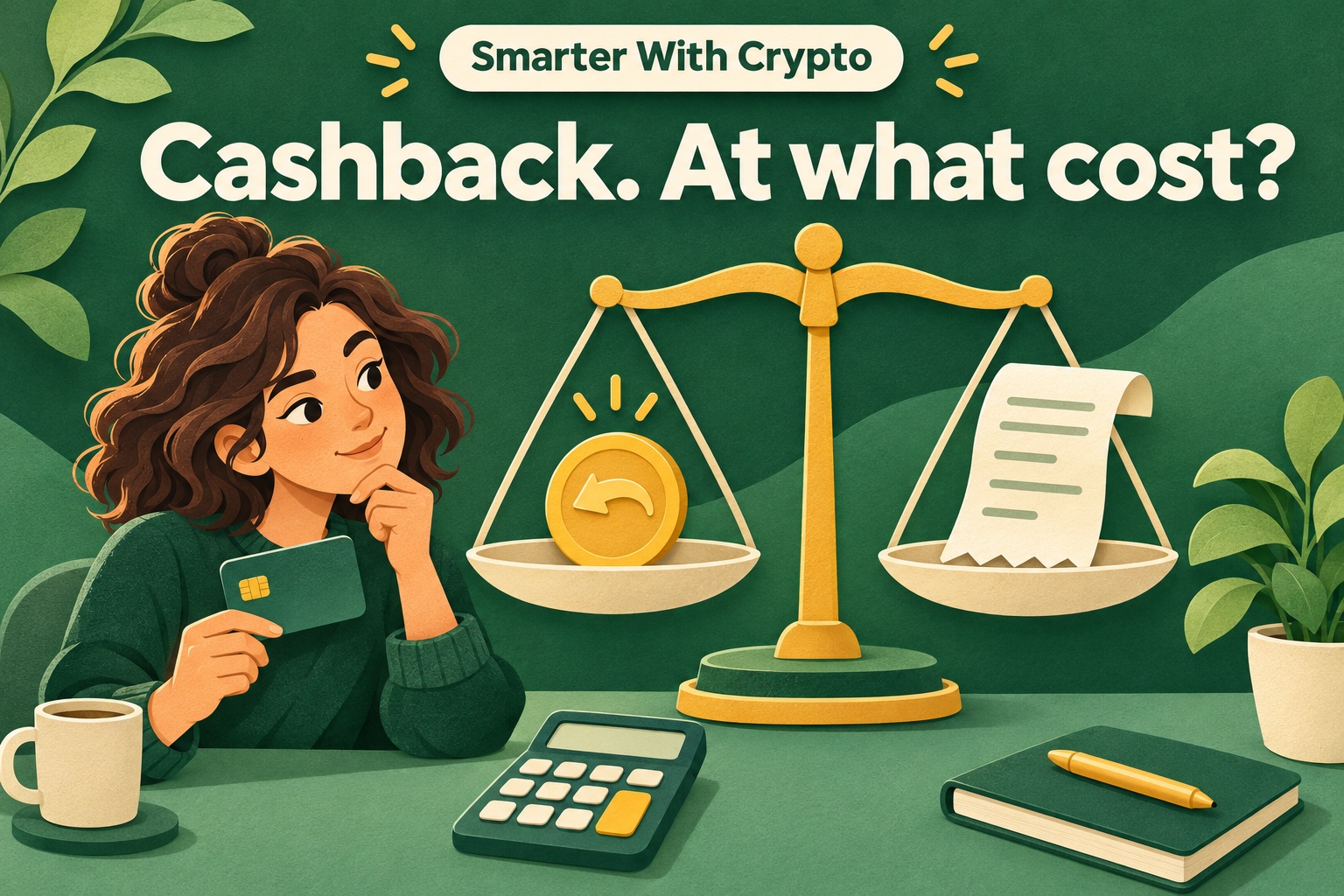
Cashback sounds like profit. What are you paying for it?
A crypto card offers a reward when you pay. That sounds appealing: you were buying groceries anyway, so why not get something back? But the large percentage does not tell the whole story. Looking at costs, conditions and the way you pay together helps you judge whether a reward really offers value. You do not need an expensive card or a complicated calculation to do that.
Start with your ordinary spending
Cashback is a reward for payments that qualify under a programme’s rules. It may arrive as money, crypto or points you redeem later. Ask not only how much you receive, but in what form, when and under which conditions you can use it. A points balance is not automatically the same as euros in your bank account.
Start with purchases you already intended to make. Spending more to reach a higher reward tier does not make the extra purchase free. Compare the same groceries and the same month, so an attractive offer does not quietly change your calculation.
The biggest percentage is not automatic
A programme may have a monthly cap, excluded purchases or conditions linked to country and payment method. Bybit, for example, describes exclusions and how reward points are redeemed. This illustrates why you need the terms for your own card version; every payment does not automatically qualify.
An advert for another country or a higher customer tier proves nothing about your situation. Write down the rate you actually qualify for, the purchases that count and the maximum reward. If you cannot establish these details, do not already count the advertised maximum as income.
Put the costs beside the reward
Check card or subscription charges, conversion costs and any foreign-currency or cash-withdrawal fees. Not every card charges every fee. Even no transaction fees does not always mean no conversion cost: Coinbase explains that a buy or sell price can include a spread. That is a difference built into the price.
The payment mode matters too. Spending your own balance differs from borrowing against crypto collateral. Nexo distinguishes these modes and attaches cashback conditions to Credit Mode. Borrowing also requires understanding interest, repayment and collateral. A reward does not cancel a debt.
A fictional example: eight euros becomes one
Suppose Noor would spend 400 euros this month anyway. In our entirely fictional programme, the whole amount qualifies for 2% cashback: 8 euros. There are no other reward conditions or caps in this example. She pays a 3-euro subscription and 4 euros in conversion costs. That leaves 1 euro before any taxes or other effects.
These figures are invented and do not describe a named provider. They show only the calculation: reward received minus all additional costs. An alternative without cashback and without these extra charges could therefore give almost the same result. Always compare the total cost of making the same purchases.
A larger reward does not remove risk
Must you hold extra crypto or lock money away to qualify for a tier? Assess that separately. A later fall in token value could matter more than a grocery discount. If the reward is paid in crypto, its value can change too. Do not count a possible price rise as guaranteed cashback.
Make a short checklist: which payments qualify, what do I actually receive, what costs will I pay and what extra commitments am I taking on? Recheck current official terms before use. Practise these decisions with the free quizzes at three levels. You can learn without applying for a card or buying crypto.
Original sources & further reading
- Coinbase — card costs and conversion spread
- Bybit — card reward eligibility and redemption
- Nexo — card modes and cashback conditions
- Nexo — borrowing rates and collateral conditions
Sources checked on .